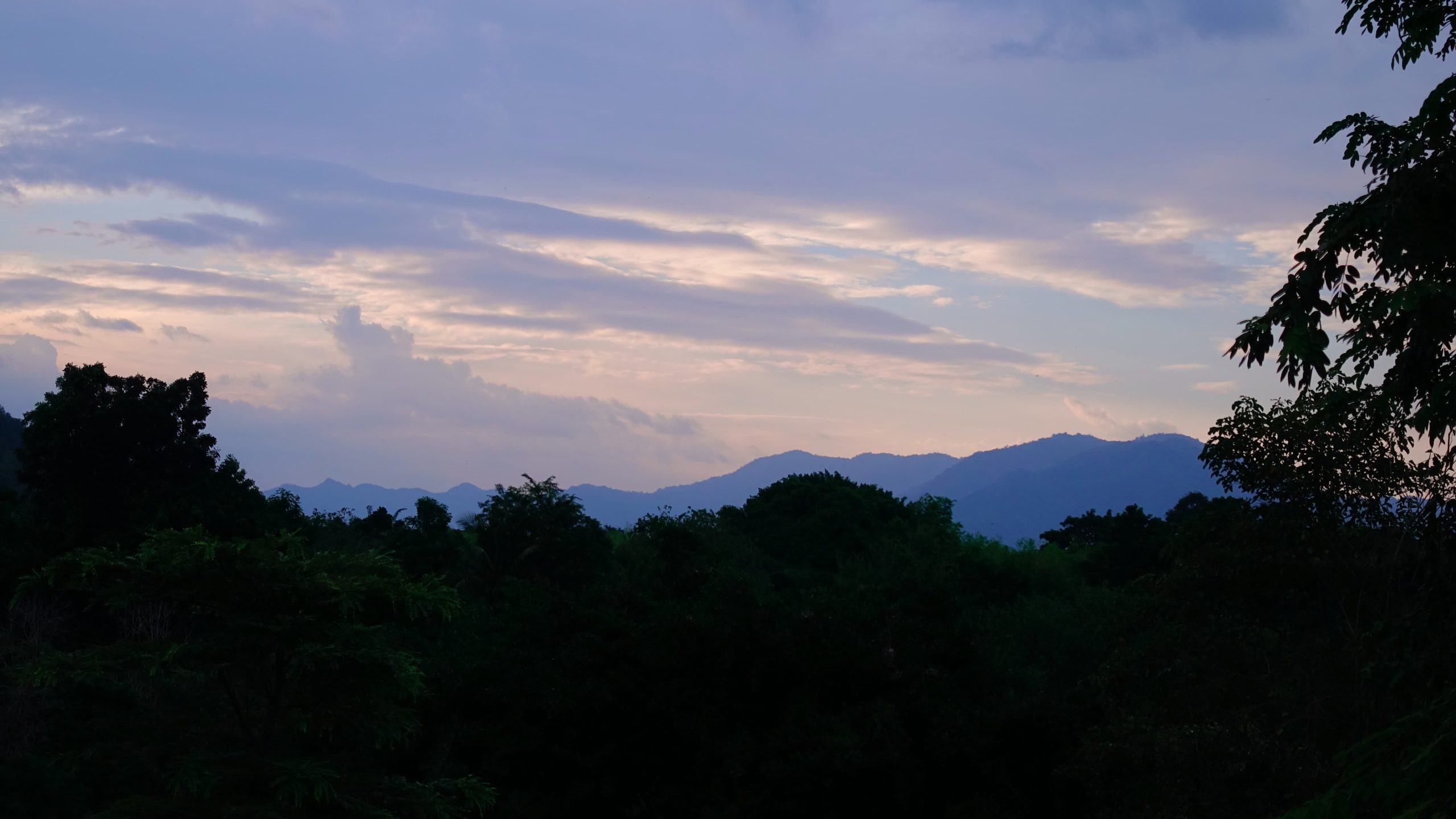
Before the heat rises, the valley is still wrapped in mist. Your horse steps deliberately along the red earth track, picking a line past exposed teak roots where the trail begins to climb into the limestone hills. High above, the jungle canopy filters the first pale light; forty minutes later, the trail opens onto terraced hillsides, crosses a shallow gravel stream where water splashes cool against the horse’s fetlocks, and skirts an old wooden spirit house resting quietly beneath a banyan tree, draped in weathered silk ribbons.
For riders who travel, the default map has long been predictable: the manicured turf and open canters of Europe, the private sporting estates of Ireland, or the wide-sky cattle ranches of Montana. Those traditions are magnificent, and they belong exactly where they are.
Asia does not compete with them by trying to mimic them. It offers something entirely distinct.
Here, the landscape is never just a scenic backdrop for a canter photograph. It is an active partner that dictates your pace, tests your horsemanship, and quietly rewrites your understanding of what a riding journey can be.
The Ground Speaks First
In a groomed arena or along an estate track, riding can easily become an exercise in pace and mechanical control. Asia’s terrain asks for something older: trust, stillness, and observation.
A mountain trail through Northern Thailand or the Indonesian highlands changes footing every fifty strides. A horse reads wet granite, bamboo roots, slick river clay, and sudden rainforest gradients long before you register them. On tidal stretches along the coast, the packed wet sand of low tide offers firm galloping ground, while soft dry sand higher up demands caution to protect unconditioned tendons.
On trails like these, your job as a rider shifts. You learn to stay centered in the saddle, keep your rein contact quiet, let the horse drop its head to place its feet, and accept that an unhurried walk down a steep jungle descent is not a delay—it is horsemanship in its purest form. The terrain forces you out of your head and into the horse’s movement.
The Living Canopy—Beauty and Bite
To ride here is to be swallowed by a botanical world that is both breathtaking and utterly indifferent to you. You push beneath massive clumps of giant bamboo arching like cathedral vaults overhead, brushing past broad wild banana leaves dripping with night dew and giant bird’s nest ferns perched high in the crooks of ironwood and strangler figs. The air smells intensely green: bruised jungle herbs, wet damp moss, and the faint, sweet incense of wild ginger blossoms crushed under a hoof.
Yet the tropical forest demands sharp respect. This is not a manicured bridle path, and the flora carries real teeth. Wild acacia, rattan vines, and the drooping woody branches of ไมยราบยักษ์ (Maiyaraap Yak—the giant catclaw mimosa) hang straight across the trail at head and shoulder height. Its woody limbs are lined with vicious, backward-curved thorns shaped like feline claws. One momentary lapse in focus while admiring the canopy can drag a low-hanging mimosa branch across an exposed forearm, leaving a jagged red trail of deep lacerations before you even realize you’ve been tagged. It is a swift, stinging reminder: on an Asian trail, long sleeves and constant forward vigilance are not fashion suggestions; they are the baseline of trail survival.
The Forest Has an Audience
Beyond the botanical maze, the wild world constantly announces itself. You do not just view nature; you listen and breathe it through your horse.
High in the upper canopy, the heavy, rhythmic whoosh of a great hornbill’s wings cuts through the morning quiet—a sound so deep and mechanical you feel it in your chest before you see the sudden flash of yellow, white, and black gliding between emergent trees. Down along the undergrowth, the electric hiss of cicadas swells with the rising temperature, punctuated by the high, territorial morning whoops of gibbons echoing across distant limestone ridges.
Then comes the quiet communication between horse and rider that no arena can teach. Rounding a shadowed bamboo bend near a reserve corridor, you feel your horse’s back tense beneath the saddle. Its ears lock forward, stiff as stone. It draws a long, deliberate breath through flared nostrils, tasting the air. Long before your human eyes can pierce the dense foliage, the horse has caught the unmistakable, heavy, musky scent of a wild elephant passing through the bamboo brake ahead. There is no panic—just an ancient, electric awareness that reminds you instantly who actually owns these mountains.
Emerging onto community communal grazing land, the energy shifts again. Here, your horse navigates calmly through loose herds of roaming Brahman cattle and water buffalo resting shoulder-deep in mud wallows. The cows barely lift their heads, flicking their ears to the rhythmic cloop of hooves on packed dirt. It is a shared, unhurried ecosystem where working animals, wild creatures, and riders coexist in natural balance.
“Asia is not Europe with palm trees. It is an invitation to horsemanship defined by living wilderness, ancient heritage, and quiet observation.”
The Rhythm of the Heat
In the tropics, climate is not a packing consideration. It is the architect of the entire day.
Great riding here is built around the cool margins of dawn and late afternoon. You mount in the quiet grey of first light, catching the mist rising off bamboo ridges while the air is still crisp and fragrant with wet leaves, crushed lemongrass, and morning woodsmoke. By mid-morning, the ride winds down. Horses are unsaddled, washed, cooled, and turned out to rest in shaded paddocks through the heat of the day, while riders step into an open-air pavilion for cold water, fresh fruit, and food cooked five miles from where you dismounted.
When an outfitter shortens an afternoon route because the humidity has spiked, or diverts away from a swollen river crossing after monsoon rain, they are not cutting your itinerary short. They are showing you the only thing that actually matters on an expedition: local literacy, restraint, and an absolute refusal to compromise the welfare of the herd for an itinerary schedule.
Horses Suited to the Mountain
The horses you encounter across Asia rarely conform to European passport stereotypes, and they shouldn’t.
You might partner with an indigenous Southeast Asian pony—compact, sure-footed, adapted over generations to heat and rugged mountain paths. You might ride a seasoned local crossbreed, an athletic Australian Thoroughbred, or an imported Warmblood managed with strict tropical cooling protocols.
Pedigree and breed passbooks matter very little on a ridgeline. What matters is whether the horse standing in front of you is fit for its climate, tacked in supple leather that does not gall in humidity, well-rested, and matched to your riding ability with genuine care. When a guide can explain their horses’ herd dynamics, individual quirks, and why a specific horse was assigned to you, you know you are in hands that take welfare seriously.
Living Heritage, Not Scenery
The horse grants a level of quiet access that roads and tour groups never touch.
Traveling at walking pace, you skirt the edges of working villages, spice groves, and community paddies without the noise, smell, or speed of an engine. You pass rural shrines where monks walk the morning alms routes, and bridle tracks carved centuries before asphalt arrived.
Crucially, an ethical ride recognizes that a rural village is not a postcard, and local communities are not background scenery. You dismount to lead past quiet schools or temples; you follow the guide’s lead on where photography is welcome and where it is intrusive. What you gain in return is genuine warmth: a nod from an elder cutting grass by the road, children waving from a porch, and the grounding realization that you are riding through someone’s home.
What Remains After the Ride
The word adventure has been flattened by social media into dramatic drone shots and high-speed gallops across empty beaches.
Real adventure in Asia is subtler, more sensory, and harder to forget:
- The rhythmic breathing of a calm horse climbing through misty bamboo forest as hornbills pass overhead.
- The sudden sharpness of adrenaline when ducking beneath hooked catclaw mimosa vines on a tight mountain track.
- The electric stillness in the saddle when your mount catches the musky scent of wild elephants deeper in the forest.
- Dismounting at dusk with dust on your boots and trail scratches on your arms, knowing the horse carried you safely and is now eating comfortably in a clean, quiet yard.
That is the Asian advantage. It doesn’t ask you to leave your standards at home. It asks you to bring your highest attention, leave your preconceptions behind, and let the horse and the terrain show you the way.
Leave a Reply