The lead rope is in your hand. Now what? Most first-time riders have no idea what to actually do in the sixty seconds between being handed a horse and being asked to mount. Seasoned riders know these steps too — but on a tight schedule, in a new country, with a horse they’ve never met, it’s easy to skip straight to the stirrup. Here are the first five things a confident, respectful rider does, every time, no matter how long they’ve been riding.
The Moment Everyone Skips
Riding-holiday content is full of footage from the saddle — cantering on the beach, weaving through jungle trails. Almost none of it shows the sixty seconds before that: standing next to a horse for the first time, lead rope in hand, deciding what to do next.
That moment matters more than it looks. It’s when a horse decides whether to trust you, and when you get your first real information about the animal you’re about to ride. Ironically, it’s often the more experienced riders who skip this fastest — muscle memory takes over, and years in the saddle can make the handoff moment feel like a formality instead of the first real information you’re getting about this particular horse. Here are the first five things worth doing in that window, whether it’s your first ride or your thousandth.
1. Ask Which Horse, and Why
Before you approach, ask the guide why you’ve specifically been matched with this horse. A well-run operation has a clear answer — your size, your experience level, the horse’s temperament and rank within the herd — and will explain it without hesitation.
Operators who can’t or won’t explain their matching process are telling you something about how much thought goes into their overall welfare and safety practices. This isn’t a trick question; it’s the same question an experienced rider asks out of habit, every time, at every yard — regardless of how many horses they’ve ridden before.
Technical Focus: ‘What made you choose this one for me today?’ A guide who lights up answering this is usually a professional who knows their herd intimately.
2. Approach From the Shoulder, Slowly
Walk toward the horse at an angle aimed at the shoulder — never straight at the face, and never from directly behind. This is the one approach angle where the horse can see you clearly with both eyes and won’t be startled by your sudden appearance.
It’s a small detail, but it’s the first sign to both the horse and anyone watching that you know what you’re doing. Even riders who’ve done this a thousand times will occasionally walk straight up to a horse mid-conversation with a guide, phone in hand, mind elsewhere. It’s often the first habit that slips when you’re distracted — worth noticing in yourself as much as teaching to someone new.
Observation Note: Horses have a wide field of monocular vision but a blind spot directly ahead and directly behind. The shoulder is the natural vantage where they can track you with binocular focus the whole way in.
3. Let the Horse See and Smell You First
Pause a few feet away before making contact. Horses build trust through calm, unhurried first impressions, and skipping straight to touching the reins or tack denies the animal the chance to actually register who you are.
A few seconds of stillness here does more for the relationship than anything you’ll do once you’re in the saddle. If the horse leans in to investigate you, that’s a good sign — let it happen at its own pace rather than reaching out to meet it halfway.
Field Check: Keep your hands still and down at your side rather than shoving an open palm toward a strange horse’s muzzle. Let the animal extend its neck and smell your knuckles or sleeve on its own terms.
4. Greet the Neck and Shoulder, Not the Face
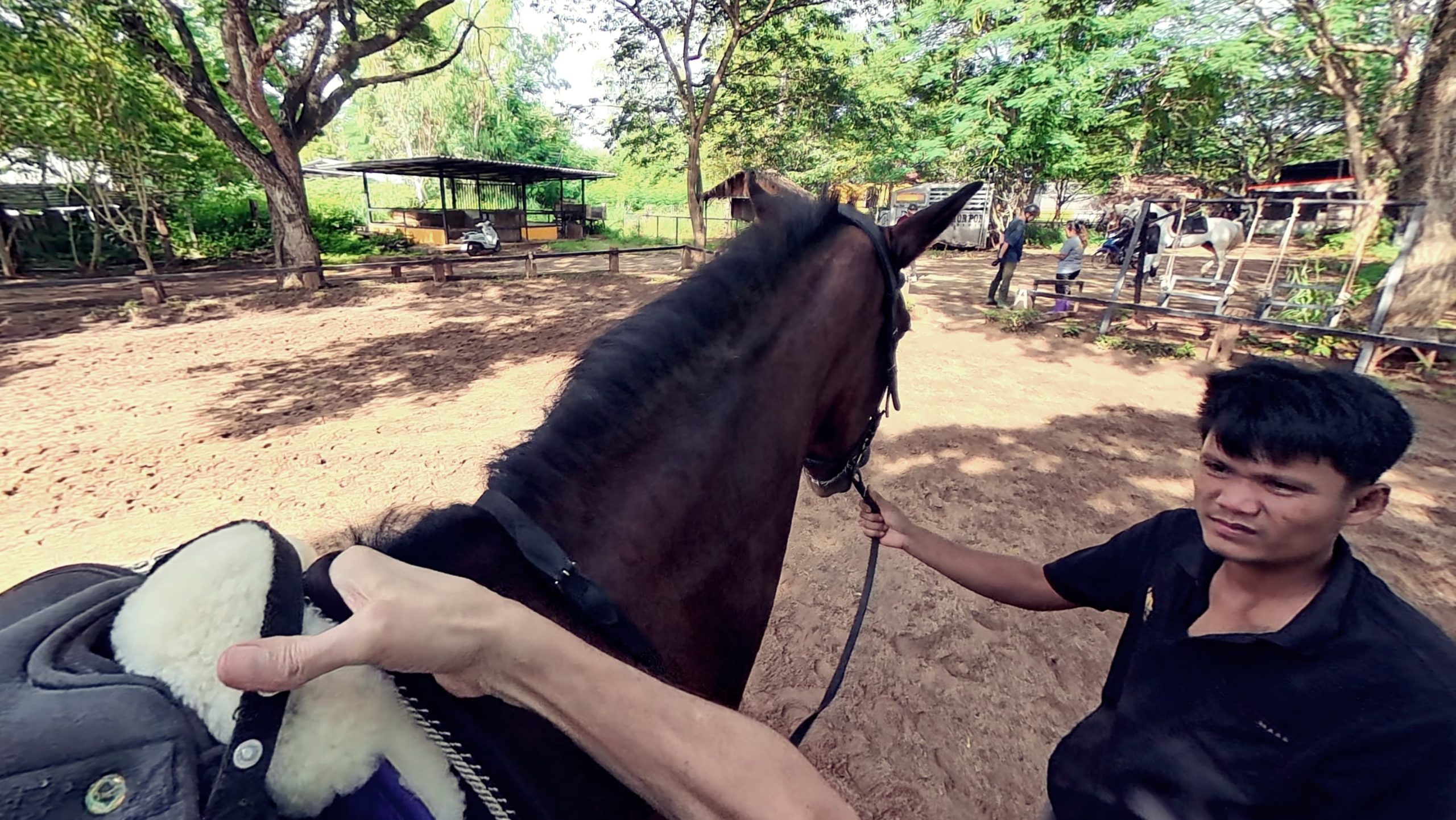
A gentle hand placed on the neck or shoulder is a natural, low-pressure greeting. Reaching straight for the face or ears — especially from someone the horse has never met — can feel intrusive before trust has been established.
Let the first touch be somewhere neutral. There will be plenty of time for a face rub once the horse has decided you’re worth relaxing around — usually within the first minute, if the first four steps have gone well.
Observation Note: Feel the tone of the neck musculature under your palm. A horse that tenses its brachiocephalicus muscle or braces sharply at initial contact is signaling underlying apprehension that warrants quiet patience.
5. Take Your Unhurried Moment Before the Stirrup
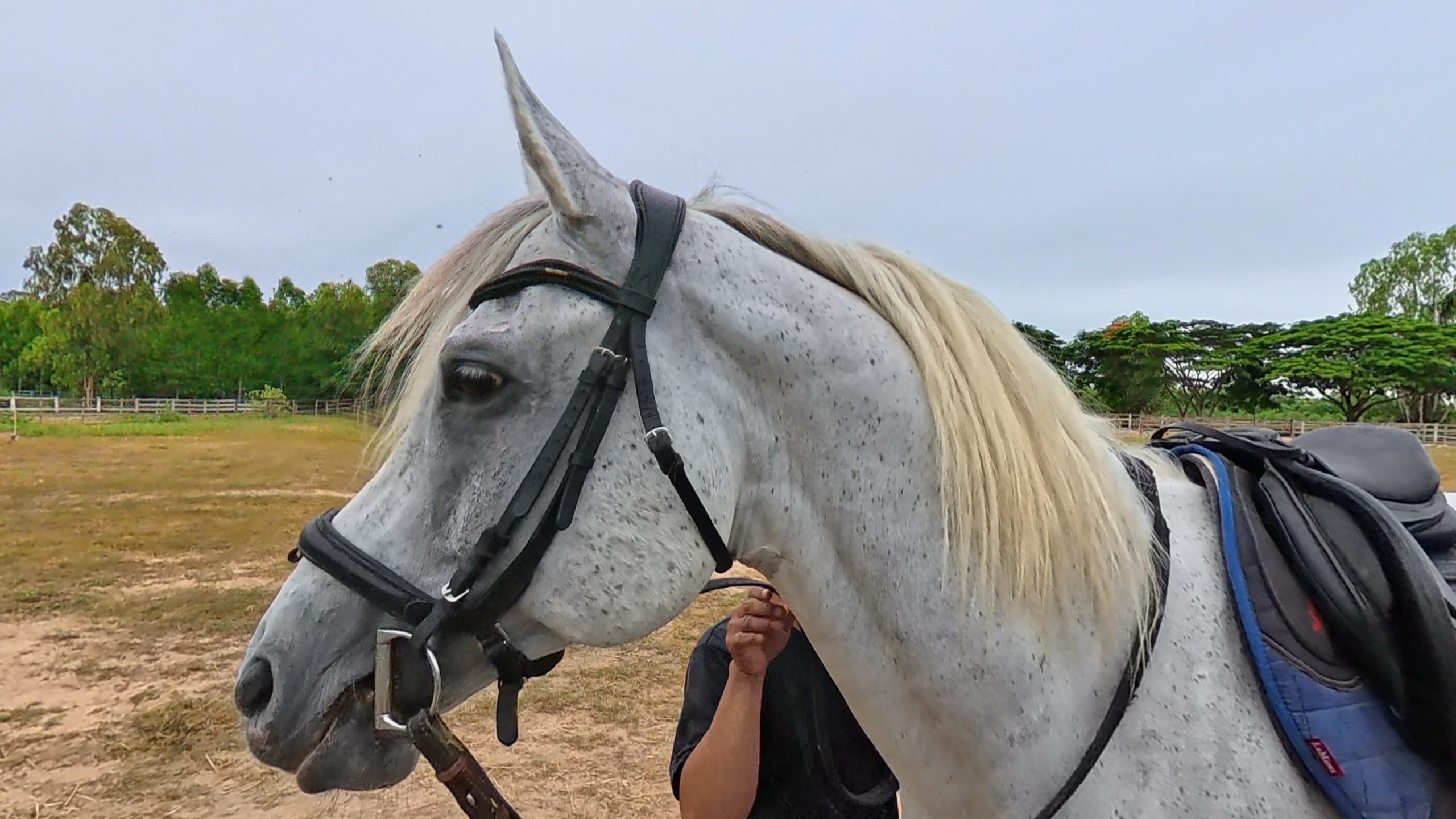
Once you’ve said hello, stop again. Watch the ears, the eyes, the breathing settle. This short check-in — the same ritual experienced riders use before every single ride, regardless of how many times they’ve ridden that particular horse — is what actually turns ‘being handed a horse’ into genuinely assessing the animal you’re about to trust with your safety for the next few hours.
This is the same grounding pause covered in more technical depth in our companion guide on tack mechanics and saddle fit — the point where a rider moves from meeting the horse to actually reading it.
Related Reading: For the complete technical check — saddle balance, gullet clearance, and girth tension — see our companion guide: ‘The Pre-Mount Protocol: Ten Technical Checks Before the Saddle.’
Why the First Five Steps Set the Tone
None of this requires special skill. It requires slowing down in a moment most tourists are rushed through – often because a schedule is tight, or because no one has ever told them there’s anything to do besides climb on.
For a first-time rider, these steps are a first lesson. For an experienced one, they’re a discipline – the same reason a pilot runs the same pre-flight checklist on their ten-thousandth flight as their first. Those first five actions are also a quiet test of the operation you’ve booked with: a stable that gives you space and time for this handoff, and staff who explain their matching process without being asked twice, are showing you the same welfare-first culture that should be present throughout the rest of your ride.
A good guide will never rush this moment, and a good rider will never skip it – no matter how many horses they’ve met before. If the pace of your arrival makes any of these five steps feel impossible – no time to ask, no space to pause – that alone is worth a quiet word before you mount.